-
Up the Creek
Our D-Max breakdown at Pardoo Station turned into an unexpected few extra days in paradise. The RAC thought it was an immobiliser problem, but after being towed 120 kms to South Hedland the mystery was eventually solved with a new battery. Once we had our car back, we headed back to Port Hedland for supplies, where we watched the massive iron ore trains and discovered just how much salt is produced at the Dampier Salt operation — 3.2 million tonnes a year, or enough for a lot of fish and chips! While in Port Hedland, we explored the beach with the metal detector, spotted evidence of sea turtles nesting nearby, and watched some local football before deciding where to head next. A chance conversation while filling our water tanks pointed us towards Cleaverville Beach, and we decided to give it a try. With the peak season over and cyclone season approaching, we found Cleaverville surprisingly quiet, peaceful and absolutely beautiful.
-
Loaves and Fishes
We’re still at Pardoo Station in Western Australia, where keeping the outback roads open is a job in itself. The station has built its own grader to tackle the corrugations and rough sections, but eventually the road runs out and the four-wheel drive — and a bit of nerve — are needed to reach a spectacular creek with crystal-clear turquoise water. When the tides too high to drive into the creek, we turn to beach fishing instead, with a whiting making it’s way into the freezer.
Back at camp, Debbie addresses another problem that is surprisingly difficult to source in the Australian outback — fresh bread! She gets the Weber going and produces a loaf that becomes the centrepiece of dinner. We also catch up with wiggly neighbour, download the latest drone footage and are reminded that Pardoo is a Wagyu beef station. There may not have been much fish in the fridge this week, but there was certainly no shortage of beautiful scenery, fishing, camping and good food. Give us today our daily bread… and perhaps a few fishes as well!
-
Australia From Above
A different view of our Australian adventure. This playlist is a collection of drone-only footage captured during our Big Lap around Australia, from the red dirt and vast outback landscapes to remote coastlines, rivers, beaches and some of the incredible places we’ve been lucky enough to visit along the way. No talking, no travelling commentary — just Australia from the air. These are the places we’ve seen from a perspective you simply can’t get from the road, and we’re putting them together here so we can look back on the journey for years to come — and hopefully give you a glimpse of what we’ve seen along the way. More footage will be added as our journey continues.
-
Fish Suppers & Bones Beach
We’re heading south from the Kimberley and Pilbara, making our way back towards Perth in the Mobi Nomad. Our first stop is the quirky Sandfire Roadhouse, with its chickens, peacocks and even a camel, before we continue on to Pardoo Station for a few days of fishing, relaxing and enjoying the luxury of mains power — and finally being able to run the air conditioning!
There’s plenty of fishing at Pardoo, a couple of very welcome fish suppers, and a trip out to Bones Beach, named for the whale bones found along the coast. We also explore the station campsite and fish one of the local creeks, keeping a very careful distance from the edge. A shark goes safely back into the water, while a good-sized flathead comes home for a classic beer-battered fish and chips dinner. Another relaxed chapter of our big lap around Australia.
-
We Needed A Rest
After the excitement of the Tanami Road, a breakdown, a trip to Halls Creek for new tyres and more than enough adventure for a while, we decided it was time to slow things down. We headed back to Derby for a few quiet days before making our way towards Broome, taking the scenic route via Ellenbrae Lake. Sometimes life on the road is all about big adventures, and sometimes it’s simply about finding a good spot, putting your feet up and enjoying a few days without having to go anywhere! Back on the Fitzroy River, though, we couldn’t resist another attempt at catching that elusive big fish. The crocs were still keeping an eye on us, while the river provided plenty of surprises — including catfish, stingrays and, finally, a barramundi! After that it was back to Broome for the less glamorous side of travelling: washing and shopping but at least there were hot showers and air-conditioning. And despite Wayne promising to keep us away from unsealed roads for a while, he somehow managed to find another one… Some things never change!
-
After four months of epic adventures…..
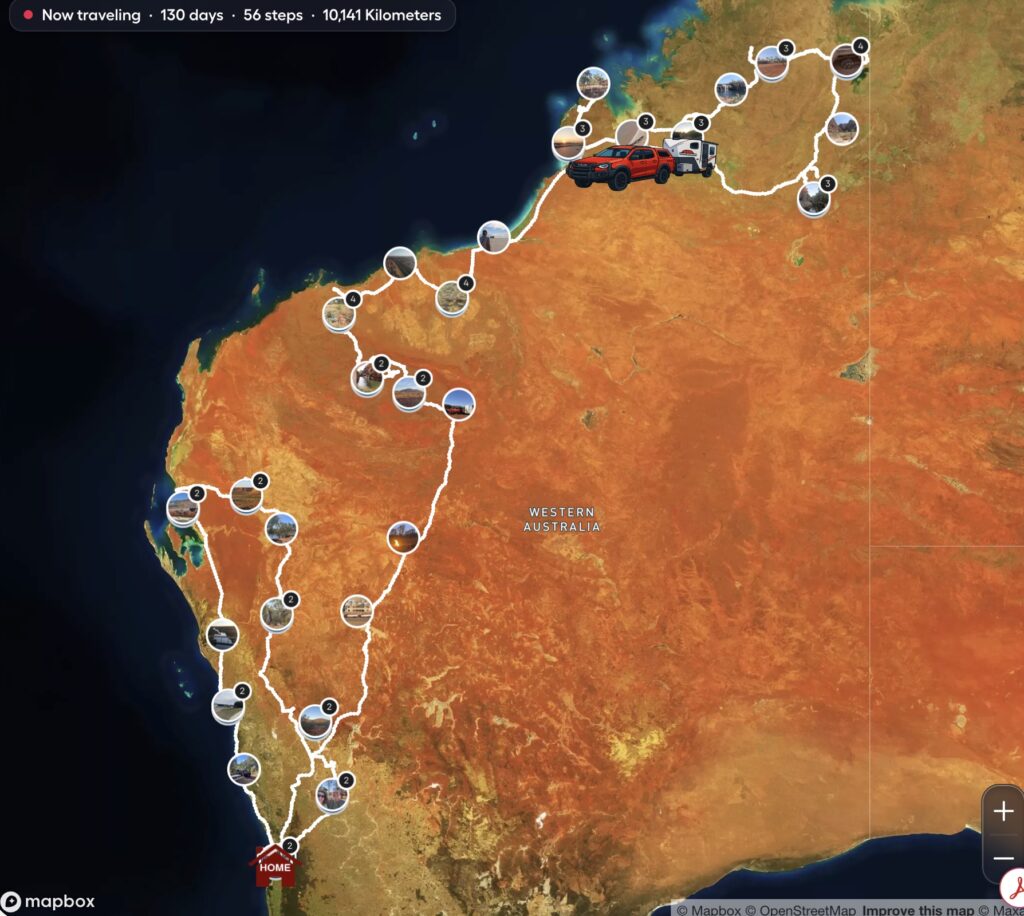
After four months of epic adventures, we decided it was time to slow things down a little and take a breather.
A week back on the grid in Derby, followed by five days relaxing with a spot of fishing and a lot of doing not much at all, was exactly what we needed. It would not make for particularly exciting viewing, though, so there’s no video this week.
We’re now slowly retracing our steps towards Broome, where we’ll restock our supplies and start making plans for the journey south.
Along the way, we’ll be taking in a few of the major sights, with around 3,500 kilometres ahead of us before we’re back in Perth for Christmas.
Sometimes you just need to stop, recharge the batteries and enjoy doing absolutely nothing for a while.
We’ll be back next week with a new video, so keep an eye out for that.
-
Beware Of The Dragons
With Mobi repaired and the D-Max still in one piece, we’re finally back on the road again as our Australian Big Lap continues through the Kimberley and onto the Tanami Track. After weeks of corrugations, we check over the vehicles and gear before heading to Palm Springs, an old Afghan camel camp with fascinating remnants of its market garden. We also explore the old Halls Creek townsite, where Western Australia’s first payable gold was discovered, before spending a couple of nights at Parkers Rest to recharge our batteries — literally and metaphorically.
Then it’s off to Wolfe Creek Crater, one of Australia’s most remote and remarkable natural attractions. Where we spot emus and magnificent wedge-tailed eagles, and even encounter a warning to “Beware of Dragons”! With a wolf, dragons and eagles all making an appearance, it starts to feel suspiciously like Game of Thrones — although thankfully without the bloodshed. Wayne walks the perimeter of the crater before we tackle the final kilometres of the Tanami Track and finally return to the bitumen. Another unforgettable chapter of our Australian road trip.
-
The Road’s Not Great Mate!
After a week waiting for parts and repairs to get Mobi back on the road, we finally leave Kununurra and head south. But we certainly didn’t spend our time sitting around. We explored the Saturday markets, visited the Ord Dam and Lake Argyle, discovered the fascinating history of the Durack family and their incredible cattle drive from Queensland, and explored Mirima National Park — the “mini Bungles” right on Kununurra’s doorstep. From there it was on to Bow River, where we were greeted by a herd of beautiful brumbies, before setting up camp at Spring Creek.
With Mobi safely left behind, we set off for a day trip into the real Bungle Bungles. We’d been warned that the road wasn’t great, but “not great, mate” turned out to be something of an understatement! The 160 km return journey took six hours, with river crossings and corrugations putting both the D-Max and our nerves to the test. But once we finally arrived, it was easy to see why people make the effort. The spectacular domes and Cathedral Gorge were every bit as amazing as we had hoped — and well worth the exhausting journey in and out. Another big day on the road, and another part of Australia that we’re very glad we didn’t miss.
-
The Gibb River Road Bites Back
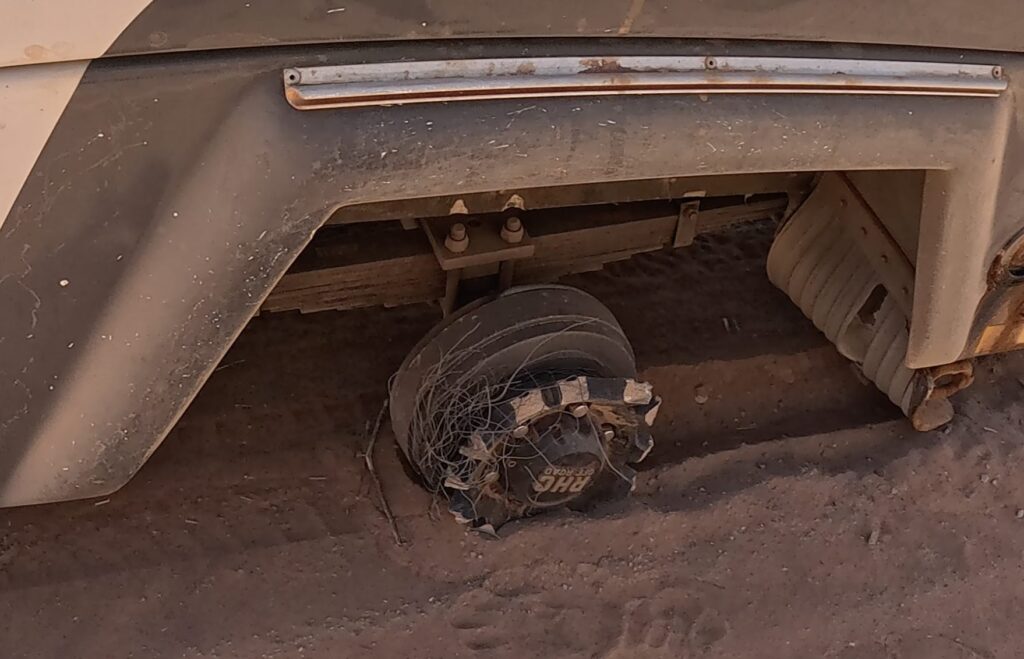
The Gibb River Road turned out to be a real challenge, and for a while there it felt as though everything that could go wrong was having a good go at doing so. But by the skin of our teeth, we made it safely into Kununurra. With no replacement parts available locally, we were incredibly grateful for the support from Mobi Nomad and RAC Insurance, who helped make a difficult situation as painless as possible.
Our wallets are still a little lighter, but honestly, it could have been so much worse. There won’t be a video this week while we catch up and get everything sorted, but we’re finally back on the road again. So, onwards we go — and let’s see what this week has in store for us!
Amazingly, the D Max was still happy to pull it along the road. 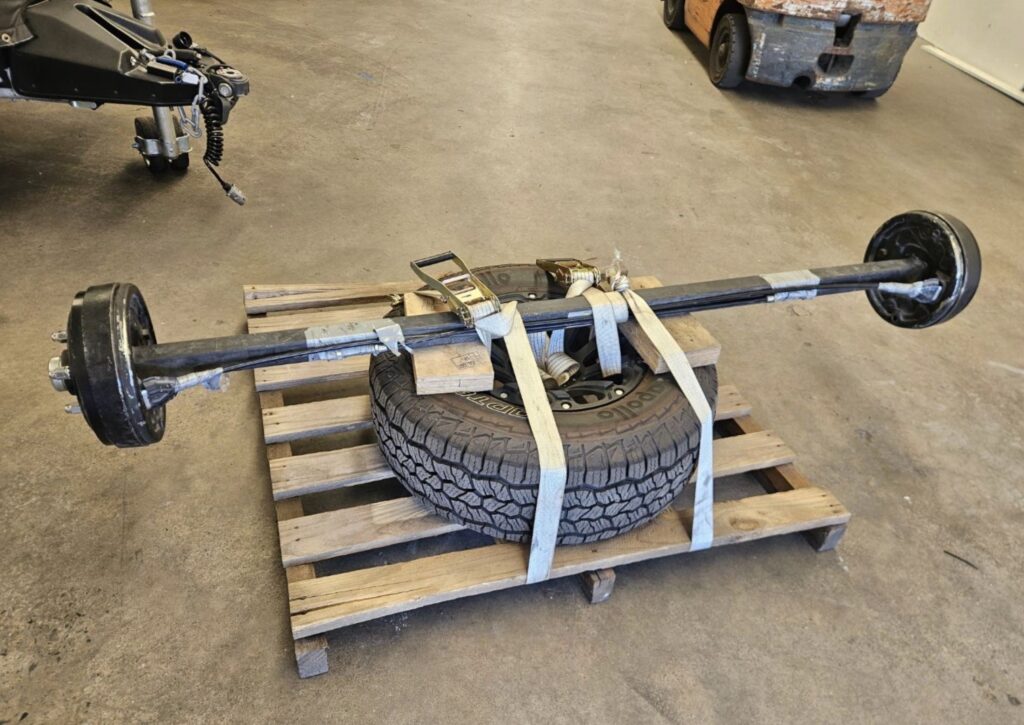
I’ll try not to bend this one. -
We Nearly Didn’t Make It!
We’re back on the Gibb River Road for another Kimberley adventure, starting with a visit to beautiful Galvans Gorge before once again tackling the famous water crossings that make this road so legendary. From Drysdale Station to Ellenbrae and Sandy Creek, we cross rivers, dodge crocodiles and battle the endless Kimberley corrugations as we make our way towards the notorious Pentecost River. It’s everything we came to the Gibb for — spectacular scenery, remote tracks, croc-infested rivers and a whole lot of water crossings!
But then it all goes horribly wrong. A blown tyre turns into a completely destroyed wheel, leaving us stranded with a badly damaged caravan, 200 kilometres from the nearest town, 50 kilometres of rough gravel still ahead and the Pentecost River yet to cross. With the help of some wonderful young backpackers, we somehow manage to limp Mobi all the way to Kununurra. The damage? A broken axle, spindle, bearings and brakes. By all accounts, we shouldn’t have been able to move the van at all — let alone drive 200 kilometres to safety. We dared to take on the Gibb River Road… and the Gibb did its very best to claim another victim!




/